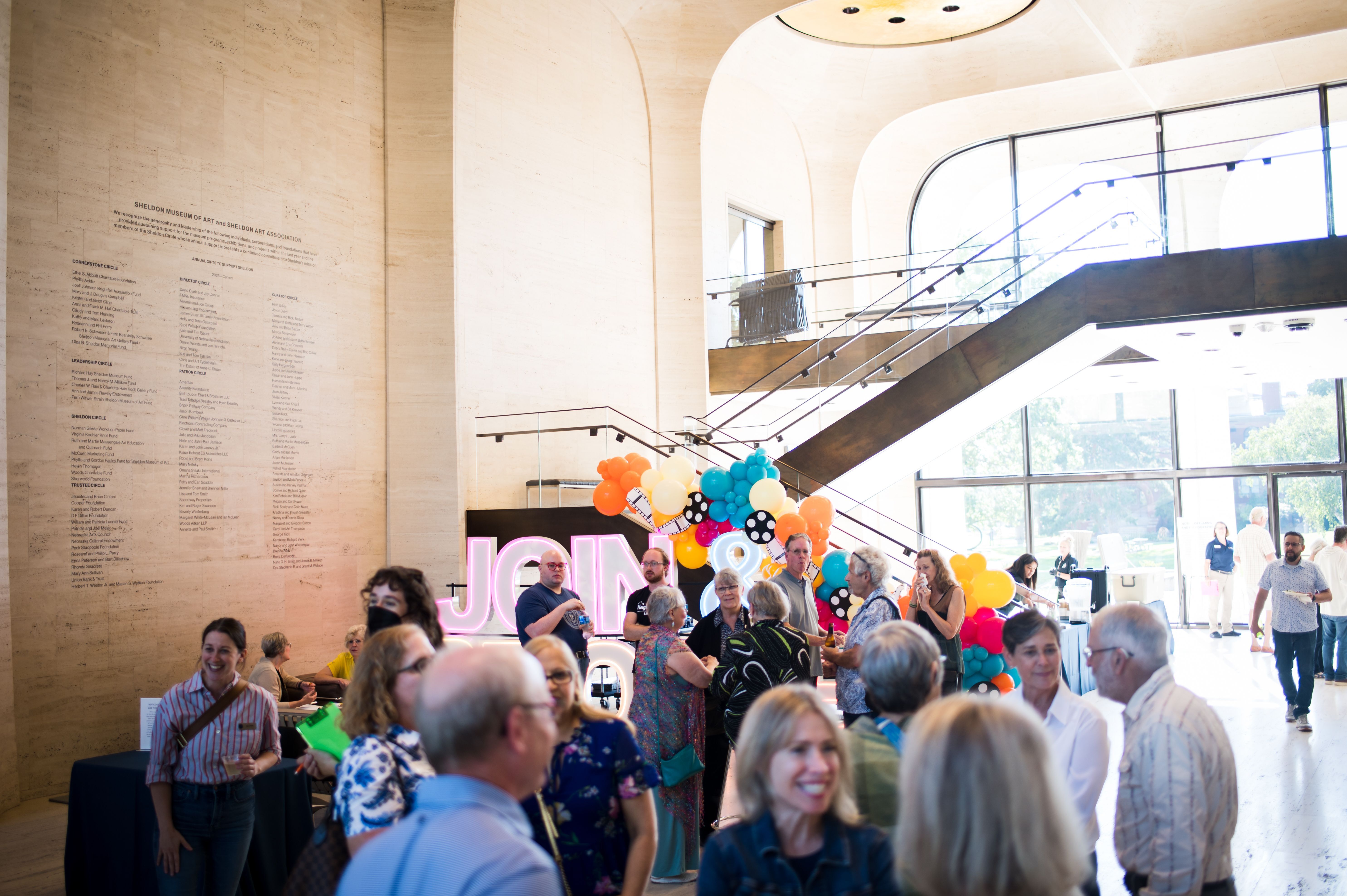
Inside the Sheldon Museum of Art’s auditorium on August 25, animated electricity pulsed among attendees gathered for a screening of the documentary Join or Die.
The setting carried its own irony. In 1888, Sarah Moore and the Hayden Art Club brought Lincoln’s first public art exhibit to town in a local post office, charging 50 cents a head to view a single borrowed painting from the Metropolitan Museum of Art. The demand was so overwhelming that extra train cars were commissioned to transport crowds from across the state.
That single act of gathering built the institution standing today, proving that when people assemble around a shared purpose, whole civic landscapes can shift. The museum auditorium provided the ideal backdrop for our collective conversation about community building, social cohesion, and civic trust.
Why Connection Matters
The Join or Die documentary examines Harvard political scientist Robert Putnam’s landmark book Bowling Alone, tracing the half-century collapse of American social infrastructure — from shrinking bowling leagues and declining service clubs to rising digital isolation. Yet Putnam’s central thesis cuts through modern cynicism with disarming simplicity: What if our democracy’s survival hinges not on grandiose political gestures, but on our willingness to join one thing?
"What if our democracy’s survival hinges not on grandiose political gestures, but on our willingness to join one thing?"
— From the documentary Join or Die, examining the work of Harvard political scientist Robert Putnam
The film asserts that connection is not merely a social preference, but a vital foundation for individual health, civic resilience, and public democracy.
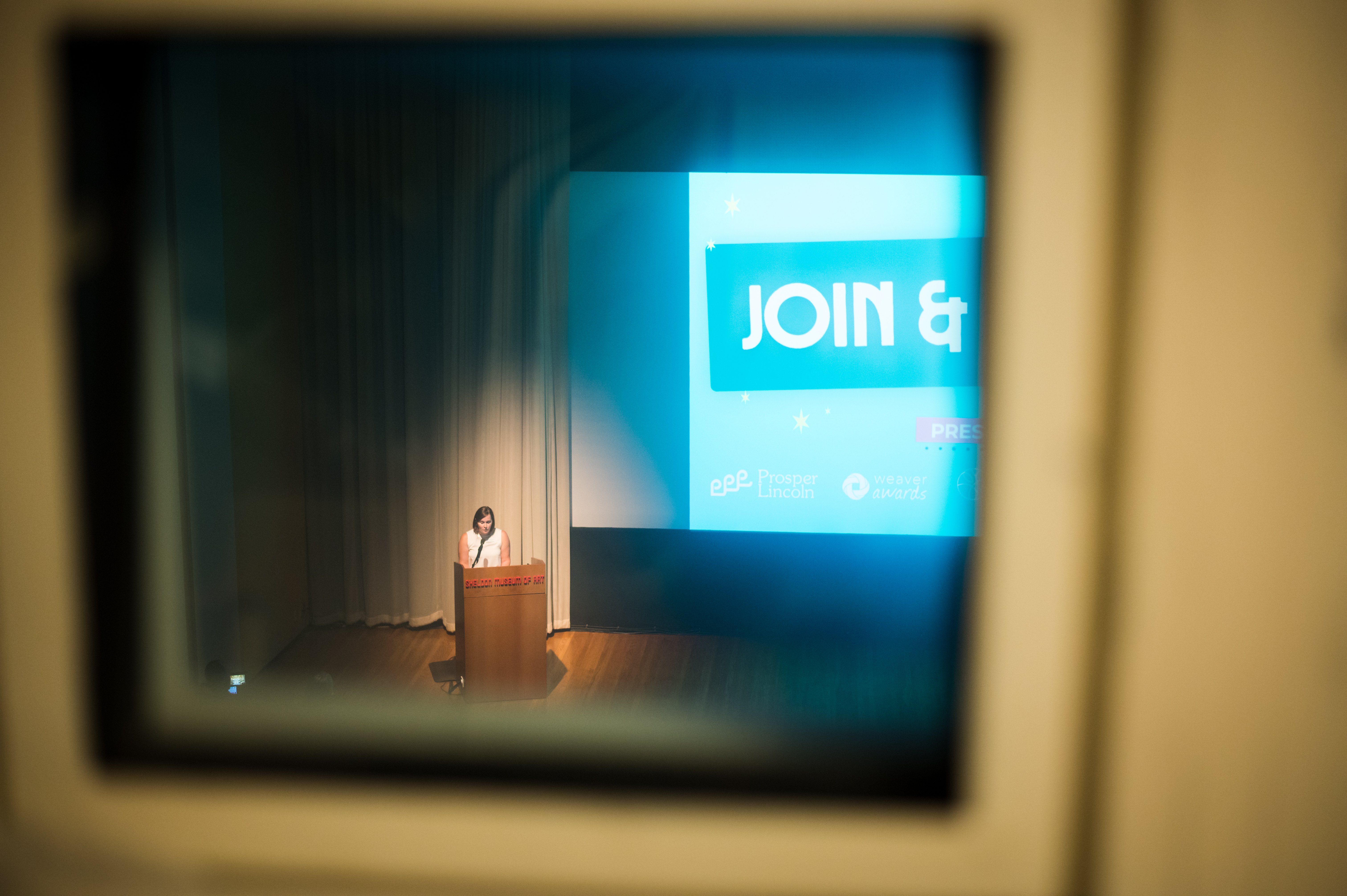
Pictured: Amanda Barker, Director of Community Engagement and Partnerships at the Lincoln Community Foundation (LCF), introduces the Prosper Lincoln’s screening of the film Join or Die at the Sheldon Museum of Art on August 25, 2026.
"Residents and leaders all across Lincoln told us that they wanted to invest in the human infrastructure of our community — the social fabric that makes Lincoln a great place to live," said Amanda Barker, Director of Community Engagement and Partnerships at the Lincoln Community Foundation (LCF). "It's the type of community where even if you go to the grocery store early on Saturday morning to pick up donuts for your kids wearing a ball cap and no makeup, you're still going to run into someone you know. That sort of connectedness."
Investing in Lincoln’s Human Infrastructure
Launched in spring 2025, Prosper Lincoln 3.0 established three core pillars: Early Childhood, Housing, and Connections. While capital-intensive projects like Foxtail Meadows build physical shelter and Lincoln Littles expands early childhood education, Connections invests in the invisible scaffolding of civic trust.
As Amanda Barker framed it, social connection is far more than a warm, nice-to-have ideal. "We know that social isolation leads to worse health and economic outcomes," Barker noted, emphasizing that deep social ties directly yield better career opportunities, higher happiness scores, and improved physical well-being.
"Social connection is more than just a nice, fluffy thing. We know that social isolation leads to worse health and economic outcomes. People who are more socially connected have better job opportunities, higher happiness scores, and better physical health."
— Amanda Barker, Director of Community Engagement & Partnerships, Lincoln Community Foundation
That sense of urgency resonated throughout the auditorium. Krista Koch, Development and Fundraising Manager at Educare Lincoln, arrived hungry for "boots-on-the-ground advocacy,” as she voiced a desire to move beyond passive support: "I want to see what people are doing right now… and what can I do as an advocate that’s not just sitting on the sidelines."
Addressing the city's underlying social dynamics, Anh McClure, co-owner of the Nook at Escape Lincoln, pointed to how easily a community becomes fragmented. "People tend to operate in pockets," McClure observed, adding that genuine civic strength relies on bringing those isolated groups together: "The thing that I always want to see is the cohesion of those pockets... Coming to things that aren't your normal is how those pockets come together."
"People tend to operate in pockets. The thing that I always want to see is the cohesion of those pockets... Coming to things that aren't your normal is how those pockets come together."
— Anh McClure, Co-owner, The Nook at Escape Lincoln
For longtime advocates Clay Naff and Tari Hendrickson, the screening offered a timely counterweight to growing civic polarization and digital distraction. Naff voiced deep concern about the forces fracturing modern life, hoping events like this can nudge residents back into shared public spaces. He urged people to step away from their screens and re-engage face-to-face in "some common endeavor with their neighbors."
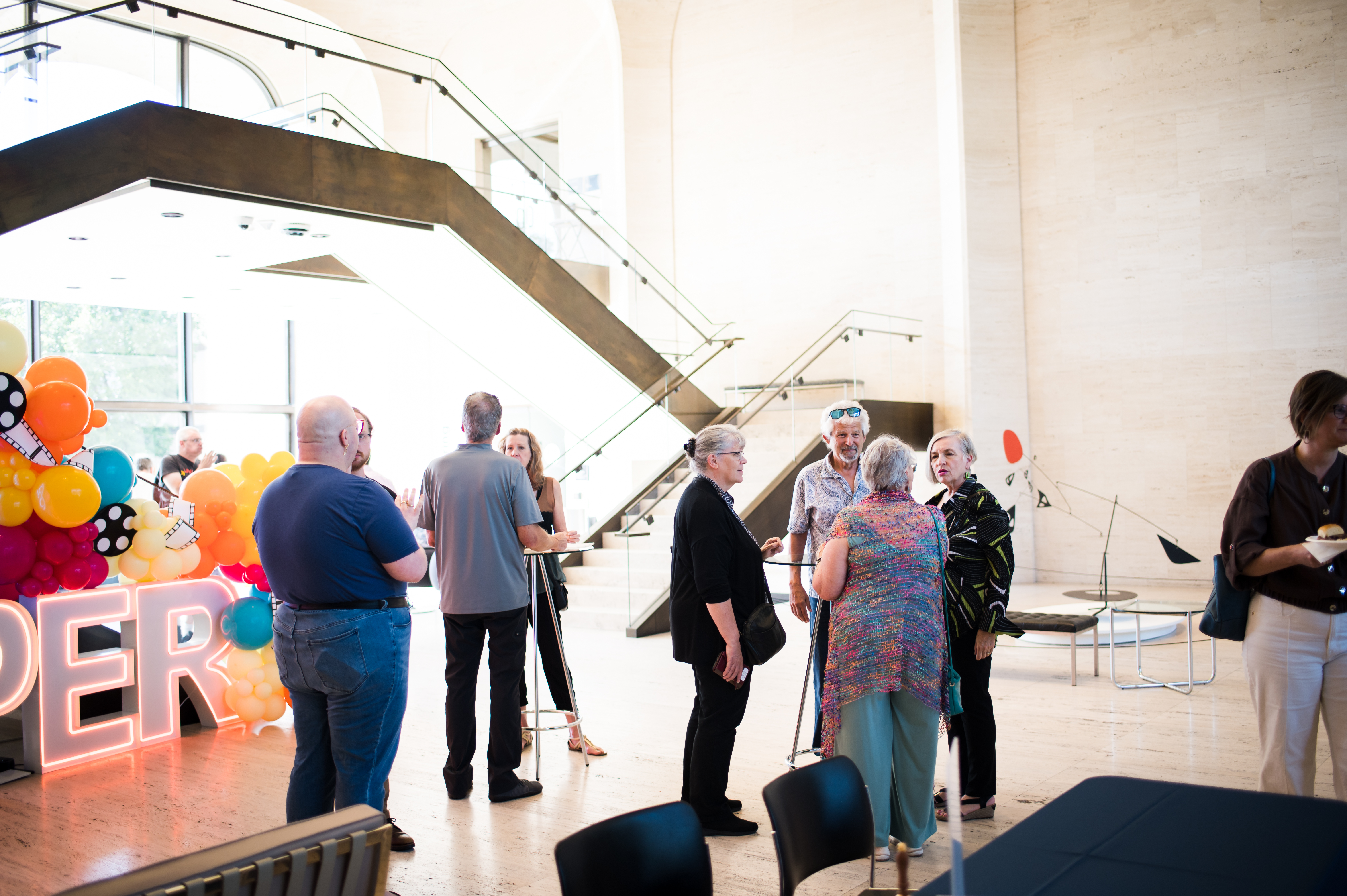
Pictured: Community advocates Clay Naff and Tari Hendrickson talk with other event attendees at the Prosper Lincoln’s screening of the film Join or Die at the Sheldon Museum of Art on August 25, 2026.
Organizers from Civic Nebraska echoed that Lincoln already enjoys a strong foundation of social connection, emphasizing how naturally the film's message fits the community. "Lincoln has such a good culture of social connectedness that I think it is just a natural fit," noted Eric Reiter, Civic Action Community Organizer at Civic Nebraska. Lily Sughroue, Director of Civic Health Initiatives, added that the goal is translating inspiration into simple action. "Next steps that I hope people take is just reaching out to someone — that power of invitation."
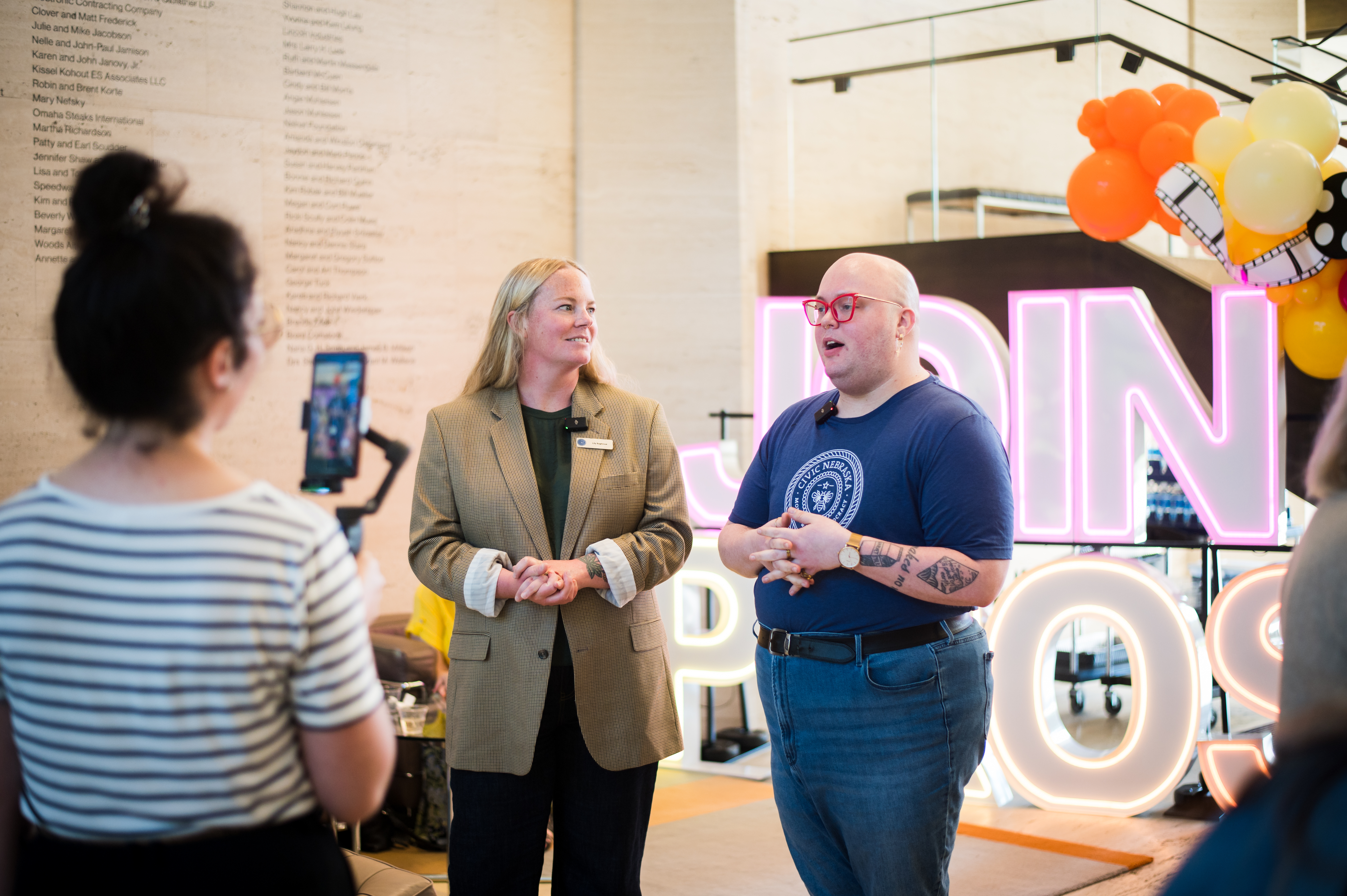
Pictured: Lily Sughroue and Eric Reiter, Civic Nebraska’s Director of Civic Health Initiatives and Civic Action Community Organizer, discuss the future of community at Prosper Lincoln’s screening of the film Join or Die at the Sheldon Museum of Art on August 25, 2026.
Other attendees echoed similar reflections, acknowledging that while Lincoln boasts a long-standing culture of civic participation, the key challenge moving forward lies in creating welcoming, meaningful entry points for younger generations accustomed to digital isolation.
Weaving the Fabric of Belonging
To ground that philosophy in neighborhood life, LCF brought the national Weaver Awards — an initiative of the Aspen Institute — to Lincoln. The program awards 20 local "weavers" a $4,000 stipend to fund grassroots relationship-building, from pickup sports leagues and card games to neighborhood art and parenting groups. Over four years, $320,000 will directly capitalize 80 local connectors.
Yet as the documentary makes clear, rebuilding civic life requires no extraordinary heroism — just a willingness to move from passive goodwill to intentional presence.
"We're not necessarily asking every person to be a super citizen here," Barker emphasized, offering a simple call to action. "Take a very ordinary step to gather people together around something you love."
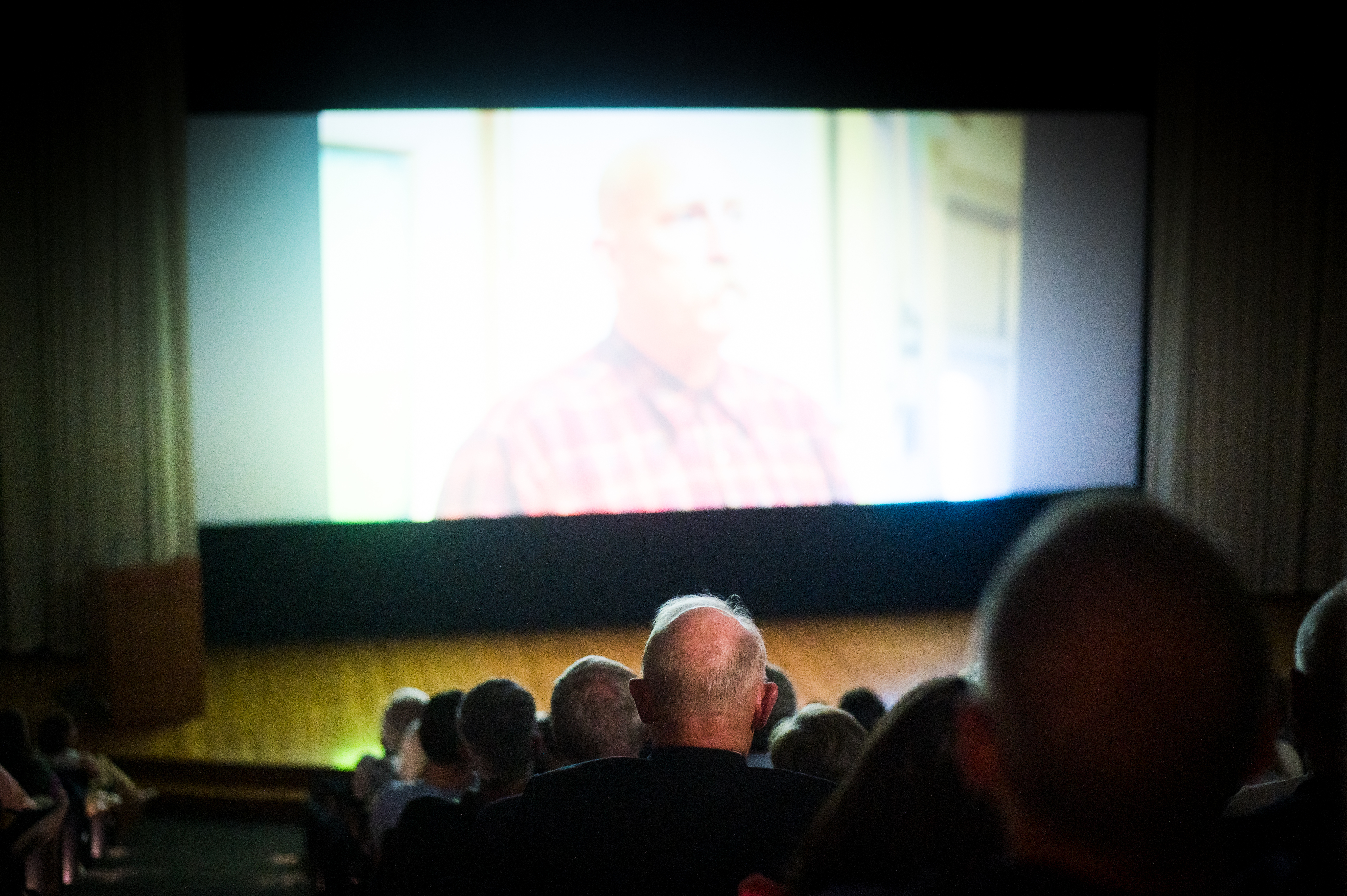
Pictured: Attendees gather to watch Prosper Lincoln’s screening of the film Join or Die together at the Sheldon Museum of Art on August 25, 2026.
That ordinary step is where abstract ideas turn into lived community. As one attendee reflected after the credits rolled, strengthening Lincoln's civic fabric often starts with the simple "power of invitation" — reaching out to someone new, opening a door, or extending a welcome.
For residents wondering where to begin, the entry points are everywhere:
- Volunteer: Visit volunteerlnk.org and commit to supporting a local community project over the next six months.
- Engage: Attend a neighborhood association meeting or join a School Neighborhood Advisory Committee (SNAC) supported by Lincoln Public Schools’ Community Learning Centers.
- Reach Out: Introduce yourself to someone on your block, or invite a colleague to join you at a local event.
As Rev. Juan Carlos Huertas noted during the Prosper Lincoln 3.0 launch, "Hope increases with imagination." A city's health isn’t measured merely by its skyline, but by the thickness of its social web — the everyday relationships built when neighbors choose to show up for one another. By taking that small, intentional step to join in, Lincoln residents ensure that no one in our community ever stands alone.